Booking, Loyalty and Deals: Why Barbers Need One Platform
Your Saturday book is full and Fresha or Booksy deserves some of the credit. The calendar works. Reminders go out. No-shows are down. As booking software, both do the job.
Here's the question worth sitting with: how many of the customers in that calendar could you reach tomorrow, on your terms, without paying per message or per new client? A booking platform knows who sat in your chair. That's not the same as you being able to do anything with them. The customer made an account with Booksy, books through Booksy, gets reminders from Booksy — and lives in an app where every other barbershop on your high street is a scroll away.
Booking answers "when is my next haircut?" It doesn't answer "why this shop, again, and can they reach me when a Tuesday goes quiet?" For that you need loyalty and outreach — and they only pull their weight when they're wired into the same system as the bookings.
(If you'd rather just see how LocalPal does it, here's our merchants page.)
The two-systems problem
Walk down any UK high street and you'll find the same setup in shop after shop: bookings on Fresha or Booksy, loyalty on paper cards by the till — or no loyalty at all — and marketing that amounts to an Instagram post nobody's regulars will see.
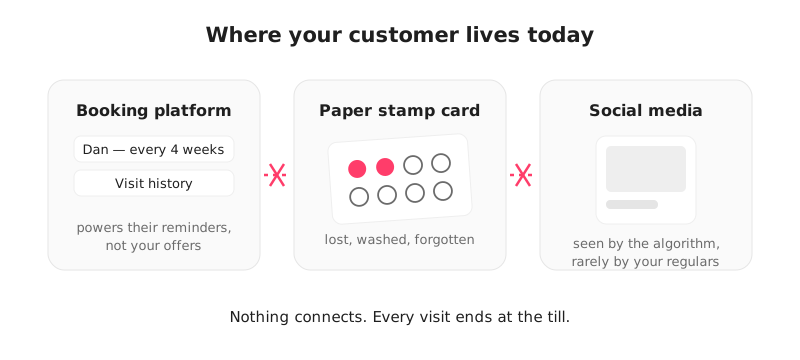
Each piece works on its own. Together they don't add up, because nothing connects:
The booking platform knows Dan comes in every four weeks, but that history powers its reminders, not your offers. The paper card in Dan's wallet knows he's on stamp six, until the card goes through the wash. And when you've got a dead Wednesday afternoon, neither system gives you a button that says "message my regulars."
To be fair to the booking platforms — they've noticed the gap. Booksy includes digital stamp cards in its subscription, and Fresha sells loyalty as a paid add-on. So the feature-checklist answer is "loyalty: yes." The practical answer is thinner. That loyalty card lives inside their customer app, inside their marketplace, alongside your competitors. The relationship it builds accrues to the platform first and your shop second.
Where booking platforms leave money on the table
The gap shows up in three specific places.
You pay to reach your own customers. On Booksy (£40/month plus VAT for the first user), you get 500 SMS a month, then it's 5p per text — and Boost, the marketplace promotion feature, takes 30% of a new client's first visit, £5 minimum. Fresha's core plan is cheaper, but blast SMS campaigns are charged per message, loyalty is a paid add-on, and a new client from the marketplace carries a one-off 20% commission on their first booking. None of this is a scam — it's just a pricing model where your customer list is the platform's revenue line. The more you use your own list, the more you pay.
The marketplace works for the marketplace. Fresha and Booksy grow by keeping customers inside their app, browsing. That's properly useful when you're new and need discovery. It's less useful in year three, when your "loyal" customer opens the app to book you and gets shown four other shops with an open slot twenty minutes sooner.
Loyalty is bolted on, not built in. A stamp card buried three taps deep in a booking app is not a loyalty programme; it's a feature nobody switched on. Loyalty works when it's the front door — when the customer sees "two stamps to a free cut" before anything else, and when completing a card triggers something. On a booking-first platform, loyalty is the afterthought. It shows.
What "one platform" actually changes
Put booking, loyalty and outreach in the same system and something happens that none of the three does alone: they start feeding each other.
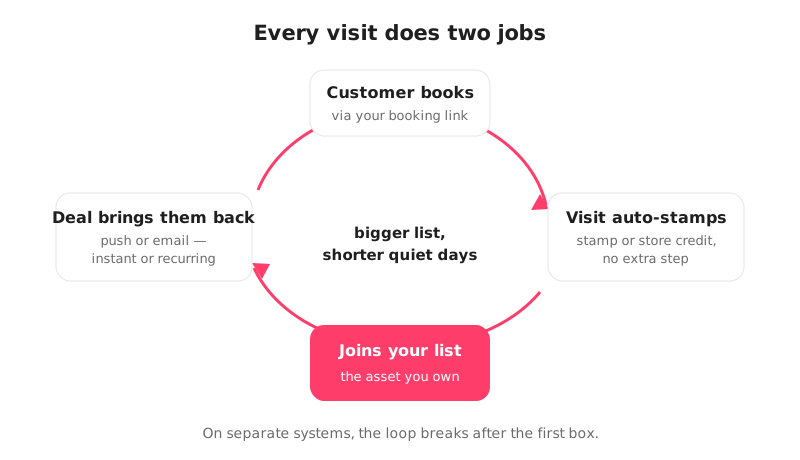
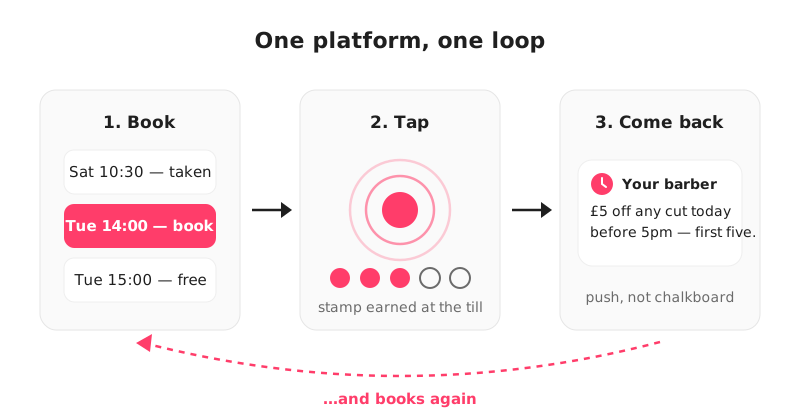
A customer books a cut through your LocalPal booking link. They come in, and the visit earns their stamp or store credit — no separate card, no "did you scan?", no staff remembering. That one visit has now done two jobs: it filled a chair today, and it put the customer on your list for every day after.
And the list is the asset. Once someone's on it, your quiet Wednesday stops being a shrug. You send a push — "£5 off any cut before 5pm today, first five customers" — and it lands on their phone in seconds. Or you set up a recurring deal that fires every Monday evening without you touching it. The full playbook for this is in How to Fill Quiet Days at Your Barbershop; the short version is that a barbershop with even 100 people on its list can fill a dead afternoon from a single notification.
The loop closes on its own: bookings create loyalty members, loyalty members receive deals, deals create bookings. Each cycle makes the list bigger and the quiet days shorter. A Dagenham barbershop put 450 customers on its list in three weeks — not with ads, just by wiring signup into moments the shop was already creating.
Compare that with the two-systems shop. Same customer, same haircut — but the visit ends at the till. No stamp, no list entry, no way back to them except hoping the algorithm shows your next post.
The maths of owning your list
Numbers, because barbers rightly don't buy vibes.
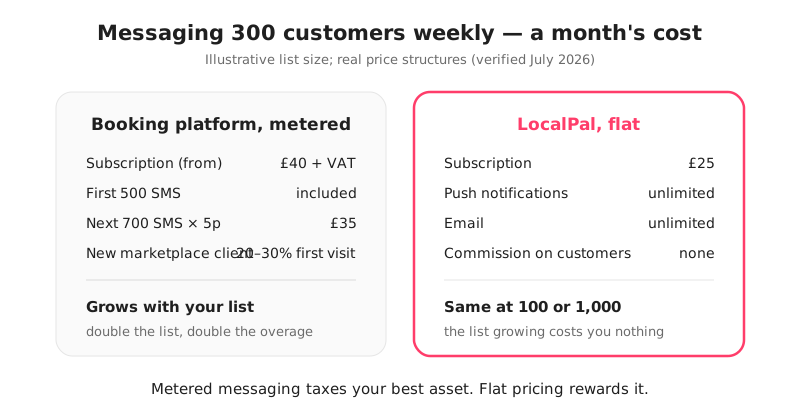
Suppose you've got 300 customers and you want to message them once a week — the sensible maximum before people tune out. That's 1,200 messages a month. On a metered SMS model, the first 500 are in your plan and the next 700 cost 5p each: £35 a month on top of your subscription, just for the messages. Grow the list to 600 customers and the overage doubles. Your best month of list-building becomes your most expensive month of messaging.
On a flat model, the same 1,200 messages — or 5,000 — cost nothing beyond the £25 subscription, because push and email don't meter. The incentive flips: the platform wants your list as big and active as possible, because that's what keeps you subscribed.
Then there's new-customer economics. A £25 cut booked by a new client through a promoted marketplace slot can carry a 30% first-visit fee on Booksy Boost, or a 20% first-booking commission on Fresha's marketplace. Fine as a one-off acquisition cost — if that customer comes back. But if they drift back into the marketplace where they found you, you paid a finder's fee for a stranger.
You don't have to rip anything out
Honest bit: if Fresha or Booksy runs your calendar well, you don't need to migrate anything to start.
LocalPal's stamp happens at the till — customer taps their phone on your NFC device, stamp lands. It doesn't know or care where the booking came from. Plenty of shops run bookings on their existing system and loyalty plus outreach on LocalPal, and that alone gets you the list, the push notifications, the flash deals and the lapsed-customer emails.
LocalPal's own booking is the newest piece of the platform — it's live and rolling out now, deliberately simple: a shareable link that takes bookings and, because it's wired to loyalty, auto-stamps each completed visit. What it isn't, yet, is a replacement for years of calendar depth — multi-site rotas, POS, no-show deposits. If you lean on those, keep them. Start with loyalty and outreach; move bookings over when the simple link covers what you actually use.
How LocalPal handles all of this
- £25/month flat. No per-message charges, no commission on customers, no loyalty add-on fee. The price is the same at 100 customers or 1,000.
- Stamps or store credit — your choice. Classic "10th cut free" stamp cards, or spend-based credit like "spend £50, earn £5." For barbers, stamps usually win — here's why.
- NFC tap-to-earn. Customers tap their phone at the till. No paper, no separate app hunt — and no app required at all: web sign-in or an Apple/Google Wallet pass works too.
- Push, email and flash deals built in. Instant or recurring deals, one-click segments like "hasn't visited in 6+ weeks," unlimited sends.
- Booking that feeds loyalty. A shareable booking link, now rolling out, that auto-stamps completed visits — so every booking grows the list.
Set your shop up at LocalPal — it takes about an hour. Or message us on WhatsApp at +44 7564 210401 and we'll walk you through it.
Your calendar's already full on Saturdays. The question is who owns Tuesday — start here.